Tiger Graphics and Patterns: A Brand Designer's Review
In the fast-paced world of content marketing, the first few seconds a user spends on a visual asset determine whether they engage or scroll past. Recently, I had the opportunity to review Tiger, a collection of digital papers designed for brand identity and visual content creation. As a designer who has spent years helping small businesses refine their visual voice, my initial impression was one of dynamic energy. This is not a subtle, background-only texture; it is a statement piece that commands attention while maintaining a level of sophistication suitable for modern branding.
The mood created by Tiger is bold yet inviting. It strikes a balance between wild creativity and structured design, making it an excellent choice for brands that want to appear approachable without sacrificing professionalism. Whether you are launching a handmade product line, promoting a seasonal offer, or refreshing social media graphics, this asset brings an emotional tone of excitement and vitality. It feels perfectly suited for lifestyle content, event promotions, and commercial marketing materials where standing out is essential.
Real-World Application in Marketing Campaigns
Imagine a scenario where a small business owner is preparing for a major product launch. They need to create a cohesive visual story across Pinterest pins, Instagram posts, and email banners. This is where Tiger shines as a versatile graphic design asset. Instead of sourcing multiple disparate images, a creator can use the patterns within this bundle to establish a unified theme immediately.
I tested this concept with a mock campaign for an online coach launching a new digital course. By applying Tiger to the hero graphics and lead magnet covers, the campaign visuals gained an instant sense of structure and flair. The asset supports critical marketing goals such as stronger first impressions and clearer visual hierarchy. When a user lands on a page with a consistent pattern like this, it signals organization and thoughtfulness, which directly contributes to improved audience trust.
- Social Media Graphics: Use the patterns as backgrounds for Instagram stories or Facebook ads to break up text-heavy content.
- Packaging Design: Apply the designs to product labels or packaging inserts to create a memorable unboxing experience.
- Digital Products: Incorporate the assets into Canva templates or printable promotions for immediate value.
Adapting Tiger for Diverse Brand Identities
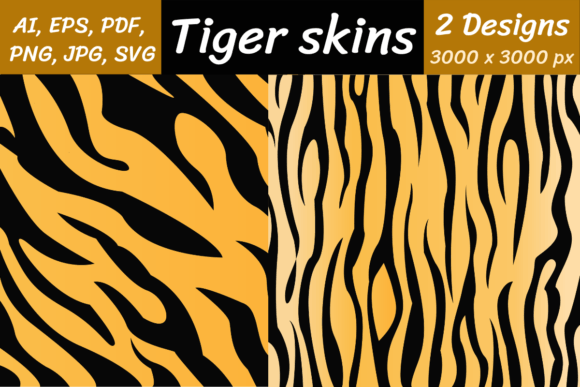
One of the most impressive aspects of Tiger is its adaptability. While the name suggests a specific animal motif, the execution works as a broader pattern element that fits various niches. For a creative entrepreneur selling physical goods, these patterns can serve as decorative brand elements on merchandise or stickers. For a publisher or blogger, they can enhance editorial layouts and web design headers.
The inclusion of multiple file formats ensures that this design bundle integrates seamlessly into any workflow. You receive Tiger AI files for deep customization, Tiger EPS for scalable vector graphics, and Tiger PDF for print-ready documents. Furthermore, having Tiger SVG allows for crisp scaling on any screen size, while Tiger PNG transparent offers flexibility for overlaying on different backgrounds. The availability of Tiger JPEG and Tiger JPG files means even those working with basic software can utilize the high-quality textures.
Strategic Placement for Maximum Impact
To get the most out of Tiger, strategic placement is key. In a busy marketing landscape, you do not want your visuals to look messy or unprofessional. This asset excels when used as a backdrop for strong typography or as a frame for product photography. It is ideal for campaign headers, product launch visuals, and branded templates where you need to guide the viewer's eye toward the call-to-action.
When designing for mobile screens, the patterns within Tiger provide a rich texture that prevents white space from feeling empty. However, designers must exercise caution in certain contexts. If you are creating formal corporate branding or dense information layouts, the bold nature of this pattern might compete with the main message. Similarly, for overly minimal brands or text-heavy ads, using Tiger as a primary background could reduce readability.
For small business branding, the rule of thumb is to let the asset support the message, not overshadow it. Use it to accentuate sections of a website or to add depth to a media kit. When paired correctly, it elevates the perceived value of the entire campaign, making it feel more premium and intentional.
Practical Brand Designer Notes for Implementation
Before integrating Tiger into a live project, there are several technical and aesthetic checks every professional should perform. First, test the pattern against your existing brand color palette. Does it complement your primary colors, or does it clash? It is also crucial to check black and white usage to ensure the pattern retains its integrity when printed in monochrome.
Place the design inside real campaign mockups to see how it behaves in context. Preview it on mobile screens to verify that the details remain visible at smaller sizes. Readability is paramount; if the pattern makes your text hard to read, consider reducing the opacity or placing the text over a solid color block. Compare Tiger against competitor visuals to ensure your design stands out without mimicking existing trends.
Typography pairing is another critical factor. Experiment with serif fonts for a classic, editorial look, sans serif fonts for a modern, clean aesthetic, or script and handwritten fonts to add a personal touch. Display font styles can work well if the pattern is used sparingly. Always review spacing and balance to ensure the design feels harmonious rather than chaotic.
Commercial Viability and Final Thoughts
For content creators and digital sellers, the licensing terms are often the deciding factor. Before using Tiger in paid campaigns, client work, or business branding, confirm the commercial license. A robust commercial license allows you to use these design assets in products you sell, ensuring you can monetize your efforts without legal hurdles.
Ultimately, Tiger represents a significant upgrade for anyone looking to elevate their visual communication. It transforms simple marketing visuals into compelling narratives that resonate with audiences. Whether you are building a brand identity from scratch or refreshing an existing one, this asset provides the texture and character needed to make a lasting impression.
By understanding where to apply Tiger and where to hold back, you can harness its full potential. It is a tool that bridges the gap between casual branding and premium visuals, offering a professional appearance that fosters recognition and engagement. For the creative entrepreneur willing to experiment, Tiger is more than just a pattern; it is a catalyst for a more memorable and effective campaign.